How to Make Fondant at Home: Homemade Fondant Recipes, Types of Fondant & Cake Decorating Guide
How to Make Fondant at Home with the Lady Berry Fondant Recipe
.Everything You Need to Know About Homemade Fondant for Cakes and CupcakesIf you’ve ever admired beautifully decorated cupcakes or cakes and wondered how decorators create smooth finishes, sugar flowers, cute characters, or elegant cupcake toppers, the answer is usually fondant. Im addicted to using it for all my designs and teaching a variety of classes & parties although Im really good at eating buttercream! Just not piping it lol
Lets Talk About Fondant:
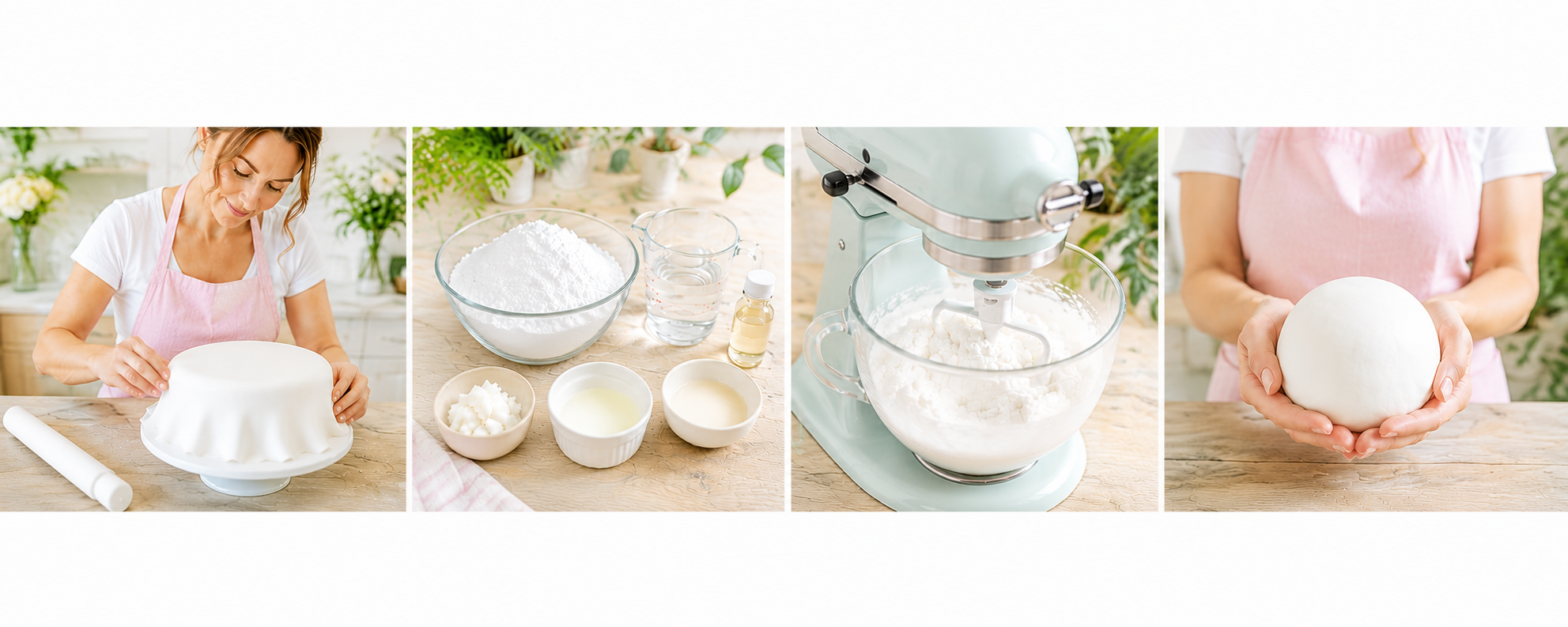
Fondant is one of the most popular decorating mediums in the cake world because it’s versatile, creative, and surprisingly fun to work with once you understand the basics. We know it can be rolled smooth over cakes, cut into shapes, modelled into figures, or used to create everything from delicate flowers to adorable themed cupcake toppers. BUT what’s the differences between home made and shop bought?
Now, before I start this blog properly, I want to be completely honest with you…
CONFESSION: I personally don’t make my own fondant very often.
The main reason is simply because I get through far too much of it every single week for it to be practical. Between cupcake decorating classes, cupcake parties, online tutorials, private tuition, and my corporate cupcake workshops, I use at least 20kg of fondant every week, sometimes much more during busy seasons.
🧁 So for my business, making fondant from scratch just isn't financially viable or time-efficient. Buying ready-made fondant gives me the consistency, convenience, and saves an enormous amount of time. You may be the same as me.
However, I think its always good tomknow how to make it and I know a lot of home bakers are interested in learning how to make their own fondant, whether that’s:
To save money
To experiment creatively
To avoid certain ingredients
To customise flavours and colours
Or simply because they enjoy making things from scratch
So although homemade fondant isn’t something I regularly make myself, I still think it’s a really useful and interesting skill to learn if you love cake decorating. Also incase or an emergency and you need some having a back up recipe is always wise! 🥣
And honestly, understanding how fondant behaves can actually make you a better decorator overall.
What Is Fondant?
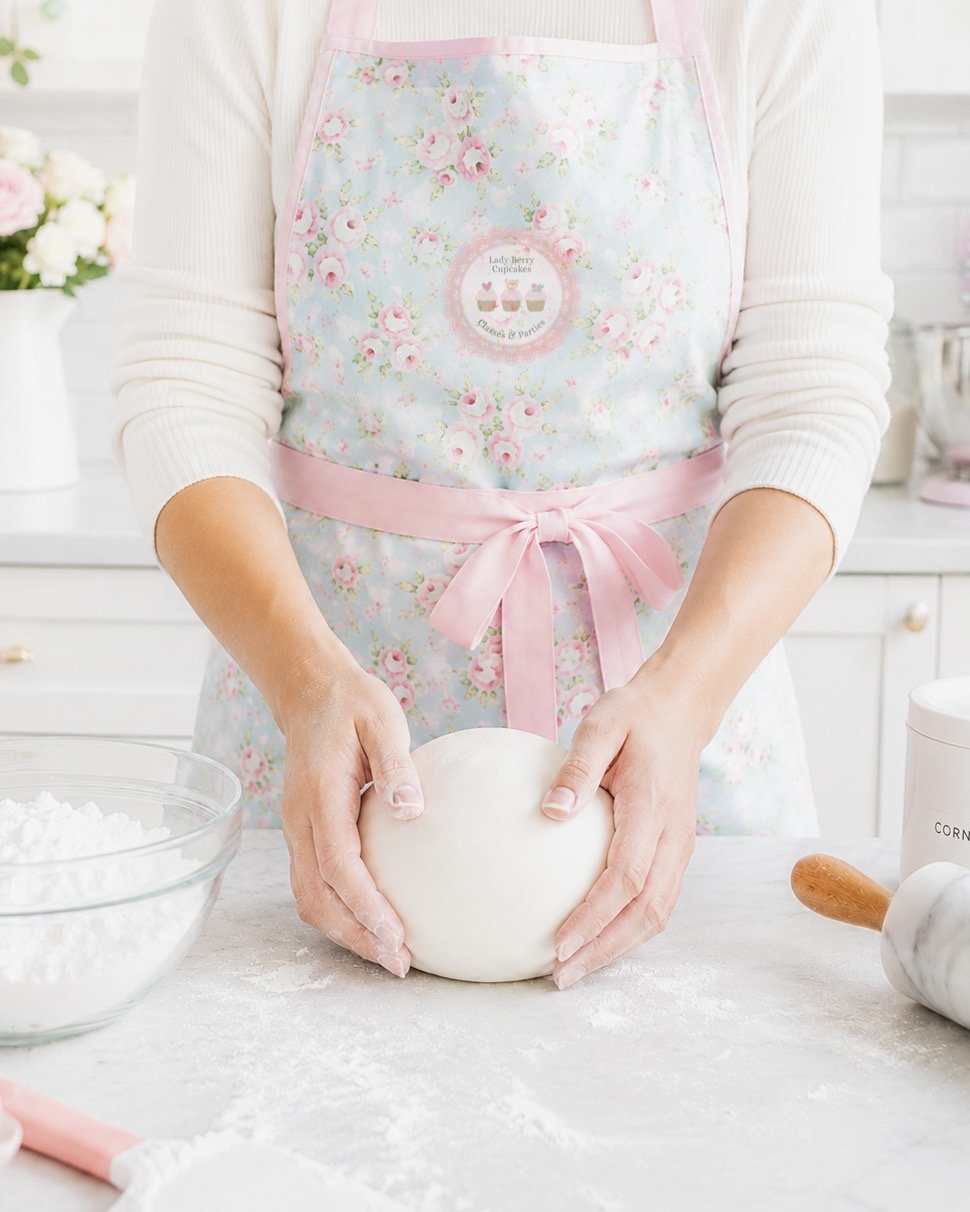
Fondant is a sugar-based icing that creates a smooth, flexible dough-like texture used for decorating cakes and cupcakes.
Us bakers commonly use it for:
Covering cakes
Cupcake toppers
Sugar flowers
Cute fondant models
Lettering
Seasonal decorations
Decorative borders and details
The Different Types Of Fondant:
🧁 Rolled Fondant
The most commonly used fondant for cake decorating. It is smooth, pliable, and perfect for covering cakes, cupcakes, and creating simple decorations.
🧁 Poured Fondant
A soft, creamy fondant that is poured over pastries, fondant fancies, and cakes to create a smooth glaze.
🧁 Marshmallow Fondant
Made from melted marshmallows and icing sugar, marshmallow fondant is softer, sweeter, and beginner-friendly. It is ideal for covering cakes and making simple cupcake toppers.
🧁 Modelling Chocolate
Made from chocolate and syrup, modelling chocolate is excellent for sculpting figures, flowers, and detailed cake decorations. It has a firmer texture than fondant and a delicious chocolate flavour.
🧁 Ganache
A mixture of chocolate and cream that can be used as a filling, coating, or frosting. Ganache creates a smooth base beneath fondant and is also beautiful on its own.
🌎 Different Countries Make Fondant Differently
One thing many beginners don’t realise is that fondant recipes vary around the world. Due to a variety of reasons including things like Climate, humidity, decorating styles, and ingredient availability all affect how fondant is made.
Fondant in Hot Climates ☀️
Heat and humidity are some of the biggest struggles for cake decorators worldwide.
Fondant can:
Sweat
Melt
Sag
Become sticky
Lose shape in heat
This is why decorators in warmer countries often use:
Firmer fondants
Air conditioning
Tylose powder
Stronger modelling pastes
Homemade fondant is usually softer than commercial fondant, so it can struggle more in heat.
Is Homemade Fondant Better?
Honestly, it completely depends on what you want from it. As I mentioned I like the consistency of shop bought fondant for teaching as I get through so much!
Homemade Fondant Benefits
Often tastes fresher
Can be softer
Customisable flavours
Fun to make
Can be cheaper for small batches
Shop-Bought Fondant Benefits
Faster
Consistent
Convenient
Better for large-scale decorating
Often more stable in heat!
There’s no right or wrong answer here.
🍰 For hobby bakers making occasional cakes and cupcakes, homemade fondant can be a really enjoyable project.
🎂 For professional decorators using huge quantities every week, ready-made fondant is often much more practical.
After many 14 years of teaching cupcake decorating, I often get asked whether fondant can be made at home. The answer is yes! So I want to share with you my Lady Berry Fondant Recipe a simple recipe that creates a smooth, workable fondant.
Lady Berry Cupcakes Homemade Fondant Recipe
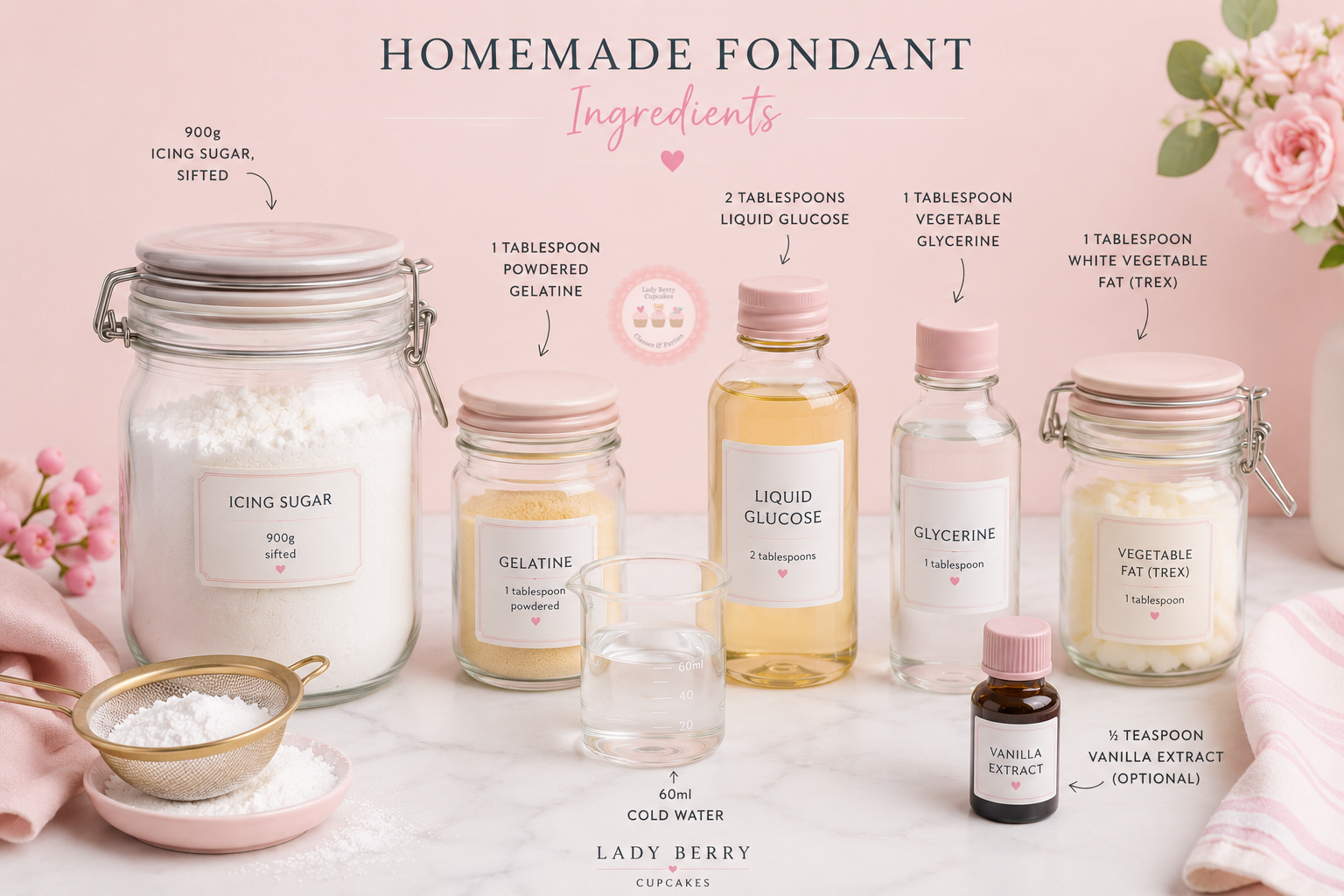
This homemade fondant is ideal for cupcake toppers, simple fondant decorations, everyday cake decorating projects.
Ingredients
900g icing sugar, sifted
1 tablespoon powdered gelatine
60ml cold water
2 tablespoons liquid glucose
1 tablespoon vegetable glycerine
1 tablespoon white vegetable fat (Trex)
½ teaspoon vanilla extract (optional)
Method
Place the cold water into a small heatproof bowl and sprinkle over the gelatine. Leave for 5 minutes to bloom.
Gently heat the mixture over a pan of simmering water until the gelatine has completely dissolved. Do not boil.
Stir in the liquid glucose, glycerine, vegetable fat, and vanilla extract until smooth.
Place approximately 800g of the icing sugar into a large bowl and make a well in the centre.
Pour the liquid mixture into the well and mix with a spoon until combined.
Gradually add the remaining icing sugar until a soft dough forms.
Transfer to a clean work surface and knead for 5–10 minutes until smooth and pliable.
If the fondant feels sticky, add a little more icing sugar. If it feels dry, lightly grease your hands with a small amount of vegetable fat and continue kneading.
Wrap tightly in cling film and place inside an airtight bag. Allow it to rest for at least 12 hours before use for best results.
Storage: Store wrapped fondant in an airtight container at room temperature. It should keep for several weeks.
🥣 Helpful Tips for Home Bakers Making Home Made Fondant
If you’re trying homemade fondant for the first time, these tips can make a huge difference.
Let It Rest Overnight
Fresh fondant is usually exceedingly soft.
I would advise you to wrap it up tightly and leave it overnight improves:
Texture
Stretchiness
Smoothness
Workability
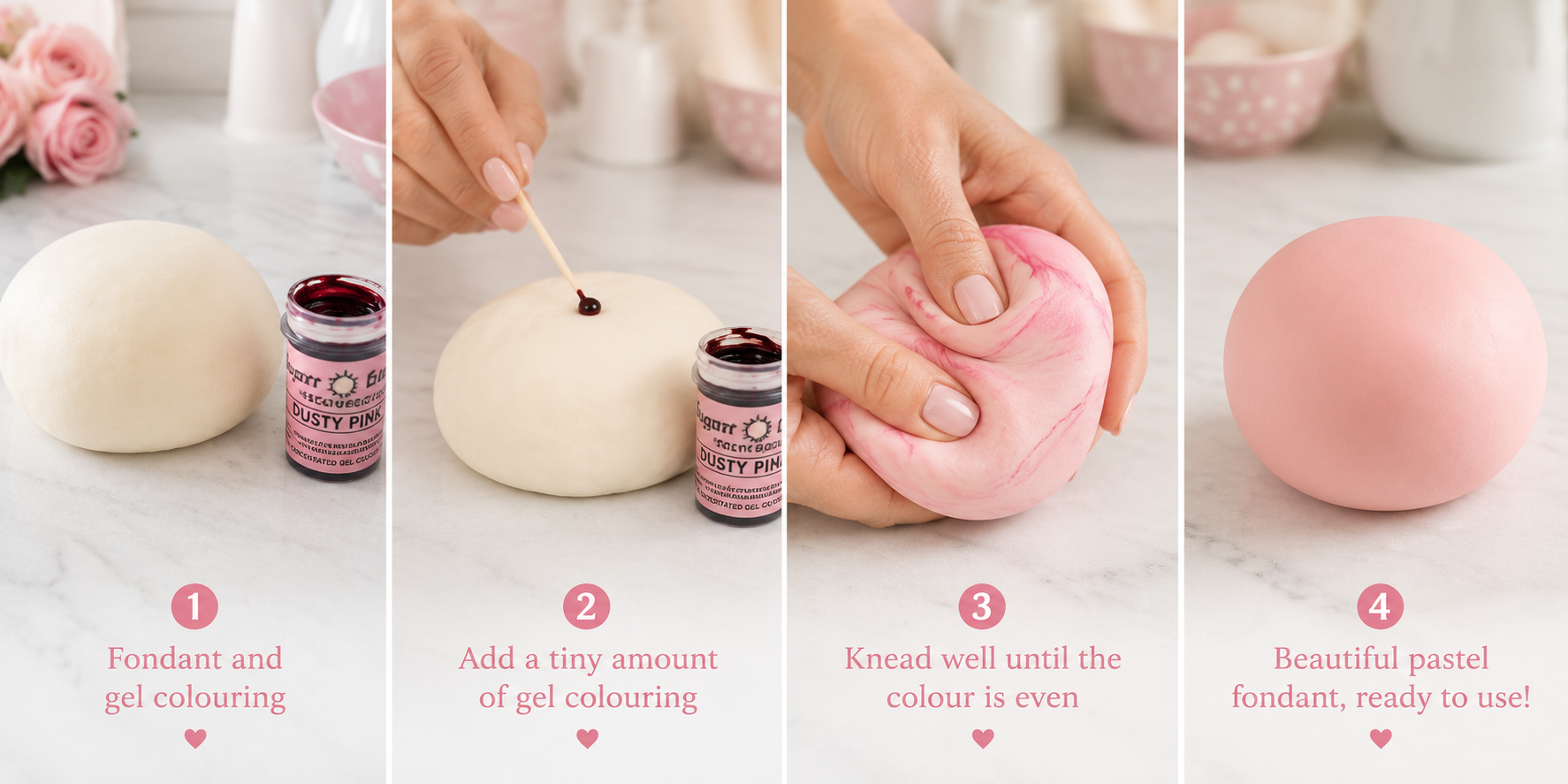
How To Colour Your Home Made Fondant:
❌ Avoid Liquid colouring can make fondant sticky.
Gel colours are much better because they:
Give stronger colour
Use less liquid
Keep the texture stable
Keep Fondant Covered:
Fondant dries out quickly when exposed to air.
Always:
Wrap unused fondant tightly ( I like to double bag it with sandwich bags)
Use cling film
Store in airtight containers
Don’t add too much icing sugar or corn flour:
Too much icing sugar can make fondant:
Dry
Crumbly
Hard to roll
More likely to crack
It’s better for fondant to feel slightly soft than overly stiff.
Rejuvenating your fondant: .
A small amount of vegetable fat on your hands or surface can well to keep your fondant soft.
Lady Berry Marshmallow Fondant Recipe
This is my Lady Berry marshmallow fondant recipe and I find its a really easy homemade fondant recipe for beginners and tastes delicious- Enjoy!
Ingredients
100g marshmallows
1 tbsp water
500g icing sugar
Optional flavourings
Method for making fondant:
Step 1
Melt the marshmallows and water together in short bursts in the microwave until smooth.
Step 2
Sift the icing sugar onto a clean work surface.
Step 3
Pour the melted marshmallow mixture into the icing sugar.
Step 4
Carefully knead together until smooth and pliable.
Step 5
Wrap tightly in cling film and ideally leave overnight before using.
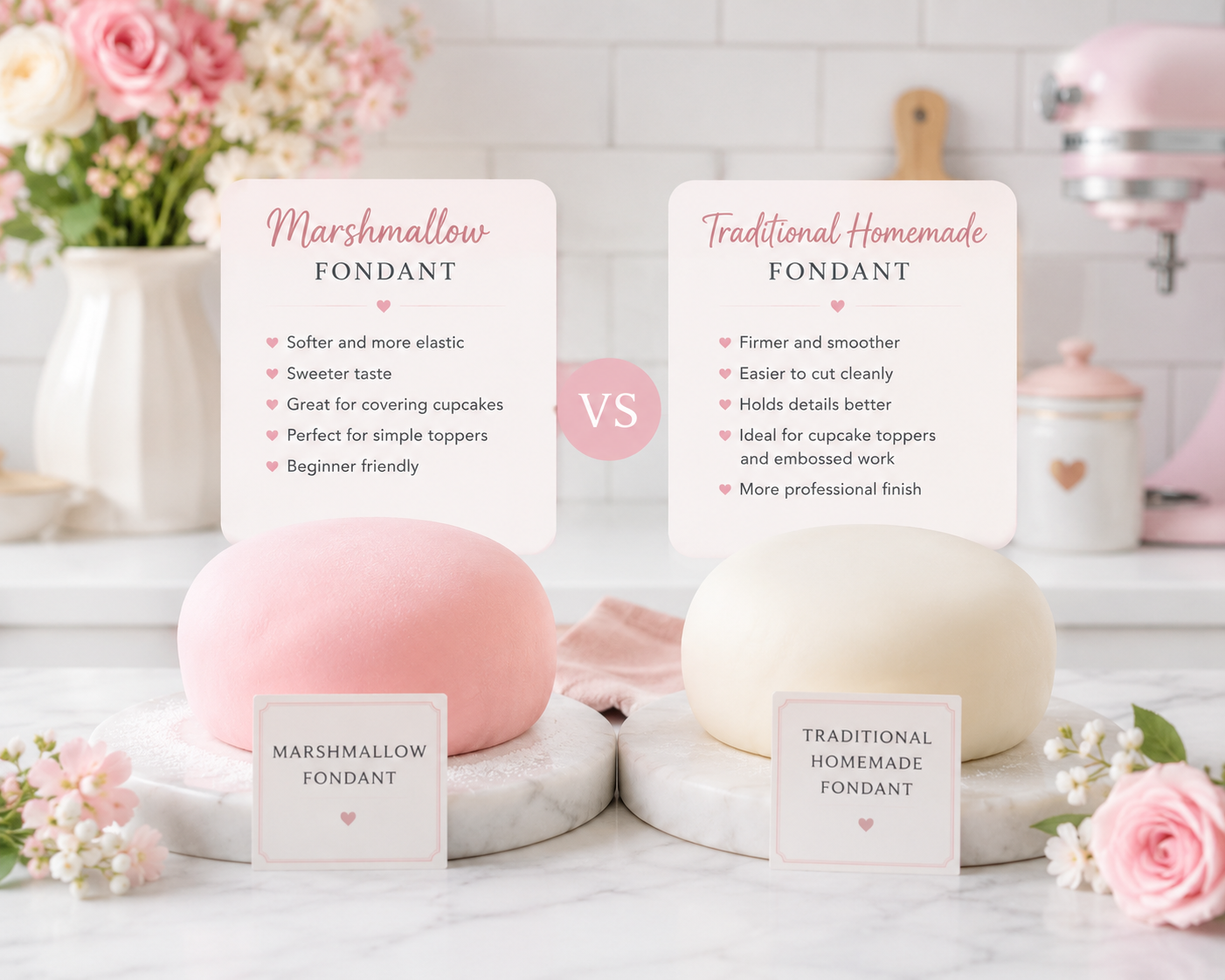
Marshmallow Fondant vs Traditional Homemade Fondant
Both marshmallow fondant and traditional homemade fondant can be made at home, but they have slightly different uses. Marshmallow fondant is softer, stretchier, and sweeter, making it ideal for covering cupcakes, simple toppers, and beginner-friendly decorating projects. Traditional homemade fondant, made with ingredients such as gelatine, glycerine, and liquid glucose, is generally firmer and easier to work with when creating cupcake toppers, embossed details, and decorations that need to hold their shape. While both have their place in cake decorating, I tend to prefer traditional homemade fondant for most cupcake decorations, as it provides a more reliable consistency and cleaner finish.
Overall using home made fondant:
If you enjoy baking from scratch and learning new cake decorating skills, making your own fondant can be a fun and useful project. Homemade fondant is ideal for simple cupcake toppers, basic decorations, and everyday cake decorating, helping you understand how fondant behaves also improves your confidence as a decorator.
However, because homemade fondant can be softer and less consistent than commercially produced fondant, it is not always the best choice for intricate details, standing figures, delicate sugar flowers, sharp edges, or decorations that need to hold their shape for several days.
For more advanced projects, I personally prefer to use a quality ready-made fondant or modelling paste, as these products offer a firmer, more reliable consistency. That said, having a dependable homemade fondant recipe in your repertoire can be incredibly useful, especially when you need fondant in a hurry or unexpectedly run out. 😉
Try A Variety Of Other Lady Berry Recipes
Have you tried one of my Lady Berry Cupcakes recipes yet?
Whether you're baking for fun, creating treats for family and friends, or growing your own cake business, my recipes are designed to be simple, reliable, and easy to follow. Each recipe has been developed from years of real-life baking and teaching experience, helping you achieve beautiful, consistent results every time. Explore the collection and discover your next favourite recipe today.
Try the recipes:
Lady Berry Gingerbread Recipe
No Spread Cookie Recipe
Duffin Recipe
With more recipes often added!
Have fun making the Lady Berry fondant and let me know how you get on! 💕
To book your cupcake decorating workshop or party, email me below and let’s get your event booked in!